iOS benchmarks are everywhere. Web2App / Webfunnel benchmarks don't exist.
If you're building a Web2App subscription business — a quiz funnel that converts cold traffic into paying subscribers — you've probably read Adapty's annual report on iOS subscriptions. It's the gold standard for mobile subscription benchmarks.
But here's the problem: you're not building an iOS app. You're running Web2App funnels on Facebook traffic. Your economics are different. Your checkout is different. Your entire conversion architecture is different.
We analyzed the paywalls of 17 Web2App funnels tracked by the Consumer App Index — extracting exact pricing tiers, trial structures, renewal prices, and monetization tactics — then cross-referenced every finding against Adapty's iOS benchmarks.
The result is the first-ever cross-platform paywall analysis purpose-built for Web2App founders.
- 88% Use Intro Discounts (iOS: Only 10%)
- Weekly Framing Dominates the Entry Point
- You Charge for Trials. iOS Apps Don't.
- The Hidden Renewal: 4.5x Price Multiplier
- 3 Tiers Is the Standard — For Good Reason
- The Quiz Is Your Soft Paywall
- 27% More Margin = Your Ad Spend Advantage
- Post-Purchase Upsells: Your Web-Exclusive LTV Lever
- Churn Prevention: The $4.20/User Opportunity You're Missing
- Localization: The Highest-ROI Test Nobody Is Running
88% of Web2App Funnels Use Intro Discounts. On iOS, It's Only 10%.
This is the single biggest divergence between web and iOS subscription apps. On iOS, 9 in 10 subscriptions sell at full price (per Adapty). In the Web2App world, the exact opposite is true: 15 of 17 tracked apps use some form of discounted intro pricing.
Why the gap? Web2App funnels convert at 1.10% vs iOS in-app at 1.60% (Adapty). You're operating in a harder conversion environment — cold Facebook traffic hitting a web checkout, no Apple Pay one-tap, no App Store trust signals. Intro discounts compensate by reducing the initial commitment.
Three apps — MyIQ, Hint, and Nebula — have converged on the same intro structure: a $1 trial for 7 days, then auto-renewal at $29.99-$42.99/mo. This mirrors Adapty's finding that trials boost LTV by 636% on iOS.



If you're selling at full price on your first touchpoint, you're fighting against the market. 88% of your competitors are using intro discounts. Adapty confirms trials boost LTV by 636% on iOS — the same principle applies to web.
Weekly Framing Dominates the Entry Point — But Renewal Shifts to Monthly
Adapty's biggest headline: weekly plans now account for 55.6% of all iOS subscription revenue, up from 43.3% in 2023. Weekly is eating the iOS world.
Web2App funnels have taken a different approach: 71% offer a 1-week/7-day tier as the entry point, but most shift billing to monthly or 4-weekly after the intro period.
The key insight: Web2App funnels use weekly as a conversion tactic, not a billing model. A "$1 for 7 days" trial feels small and low-risk. But the renewal is $29.99-$49.99/mo. On iOS, the optimal setup is $5.99/wk ongoing ($25.96/mo equivalent).
The 4 apps with true weekly renewal charge $16.71/wk average ($72.40/mo equivalent) — 2.8x higher than iOS weekly. This positions weekly as a premium/convenience option on web, not a value play.
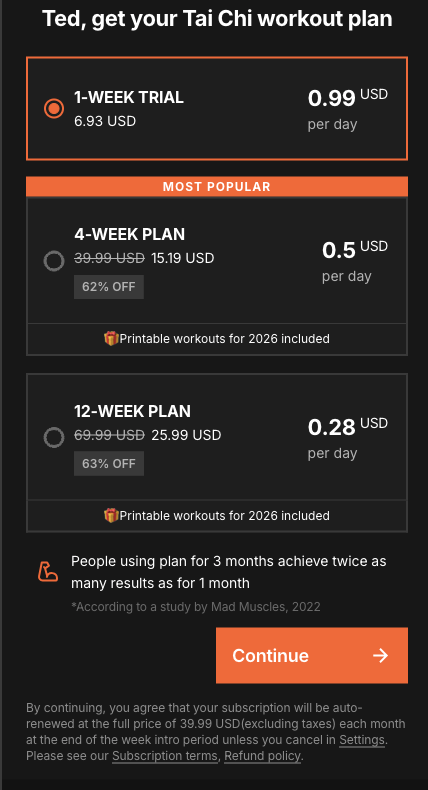
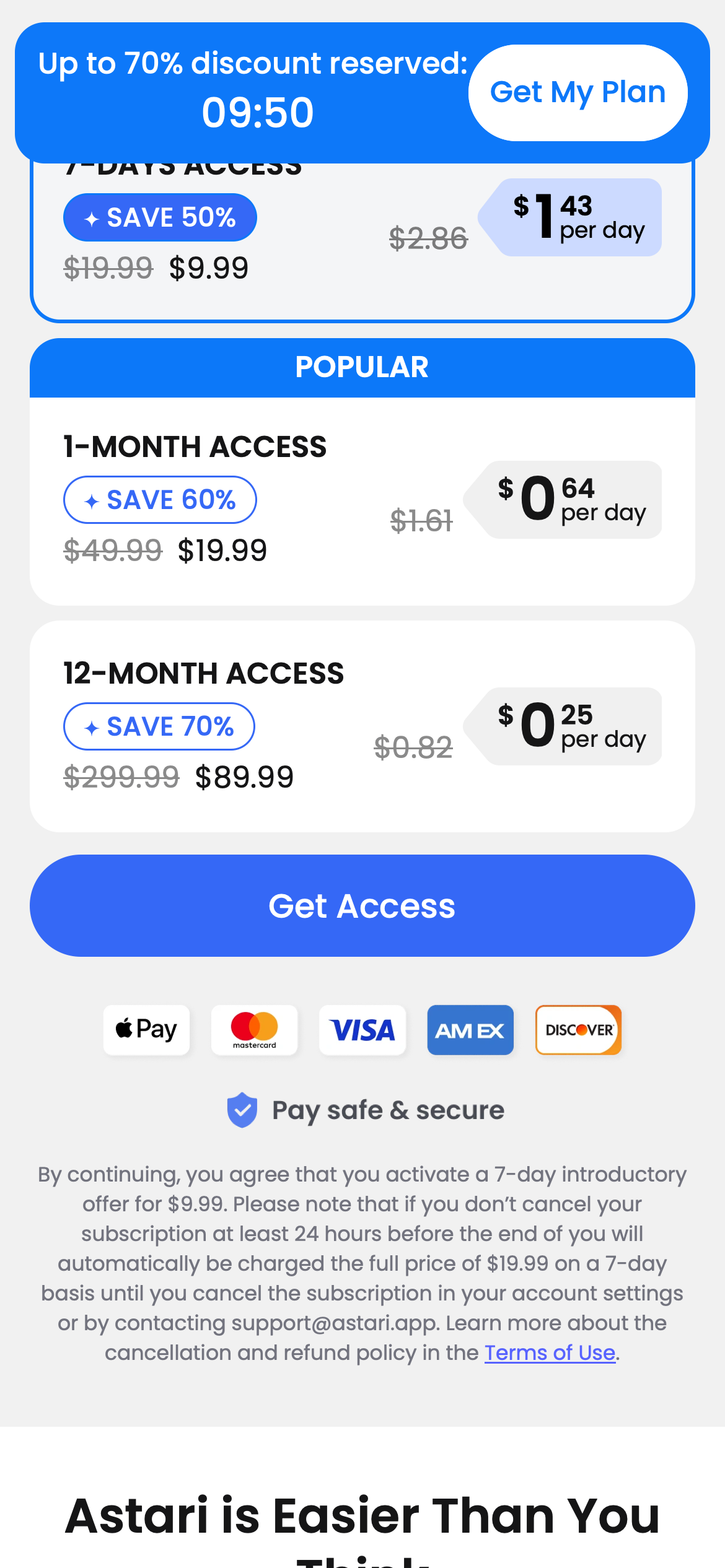
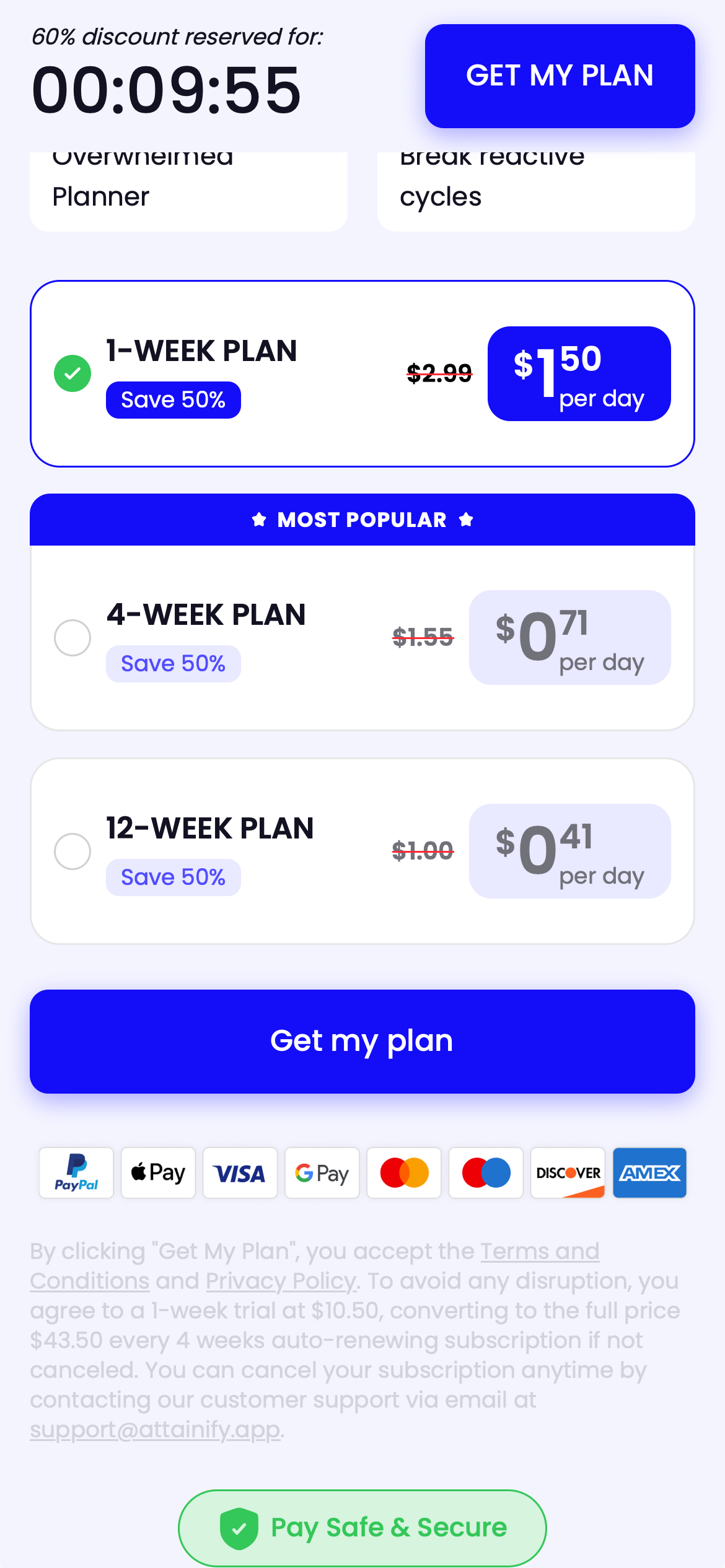
Could Web2App funnels test keeping users on weekly billing at lower price points? Adapty shows $5.99/wk with a 3-day trial is the highest-LTV setup on iOS. At $5.99/wk, you'd earn $25.96/mo — lower per-month than $29.99, but potentially with much higher retention.
You Charge for Trials. iOS Apps Give Them Away Free.
On iOS, 70% of apps offer free trials. The typical setup is a 3-7 day free trial that auto-converts. On web, trials cost $1-$5. There are no free trials in our dataset.
Range: $1 – $40.39
11.2% install-to-trial rate
Why paid trials make sense for web: They serve two purposes that free trials can't.
1. Buyer qualification. Anyone who enters a credit card and pays even $1 is a fundamentally different lead than a free trial user. Adapty shows iOS trial-to-paid conversion is 27.8% — meaning 72% of free trial users churn. A $1 paywall filters out most of those.
2. CAC recovery. If you're paying $5-$15 CPA on Facebook ads, a $1-$5 trial payment immediately recovers 10-100% of your acquisition cost on Day 0.

iOS install-to-trial rate averages 11.2% globally (14.5% in North America). Trial-to-paid: 27.8%. Web2App funnel conversion rates are lower (1.10%), but paid trials mean every converter is immediately revenue-positive.
The Hidden Renewal: Web2App Funnels Charge 4.5x More After Intro
The average Web2App funnel shows you a $8.24 intro price, then charges $37.24/mo at renewal. That's a 4.5x multiplier. Some apps go much further.
| App | Intro Price | Renewal Price | Multiplier |
|---|---|---|---|
| Wisey ADHD | $1.50 | $48.50/mo | 32.3x |
| MyIQ | $1.00 | $29.99/mo | 30.0x |
| Hint | $1.00 | $29.99/mo | 30.0x |
| Nebula | $1.00 | $42.99/mo | 43.0x |
| MadMuscles | $6.93 | $39.99/mo | 5.8x |
| Liven | $19.99 | $49.99/mo | 2.5x |
| Avoro | $4.99 | $42.50/mo | 8.5x |
On iOS, pricing is transparent — the App Store shows both introductory and renewal prices clearly. Web2App funnels operate without these constraints. This enables aggressive intro-to-renewal jumps, but likely contributes to higher churn and potential chargebacks.


Adapty reports an 8.3% refund rate on iOS. Web2App funnels with 30x intro-to-renewal jumps likely face higher chargeback rates. If your chargeback rate exceeds 1%, Stripe will flag your account. The apps succeeding with high multipliers invest heavily in onboarding and value delivery between trial and first renewal.
3 Tiers Is the Standard — And Adapty Confirms You Should Test It
53% of Web2App funnels offer exactly 3 pricing tiers. The dominant pattern is 1-week / 4-week / 12-week with the middle tier marked as "MOST POPULAR."
This is textbook decoy pricing. The 1-week tier exists to make the 4-week tier look like a better deal. The 12-week tier exists to anchor the 4-week as "reasonable." The featured tier is always the middle option.
The Classic 3-Tier Pattern
Based on Attainify's tier structure. Pattern repeated across MadMuscles, Rise Guide, BetterMe, and others.


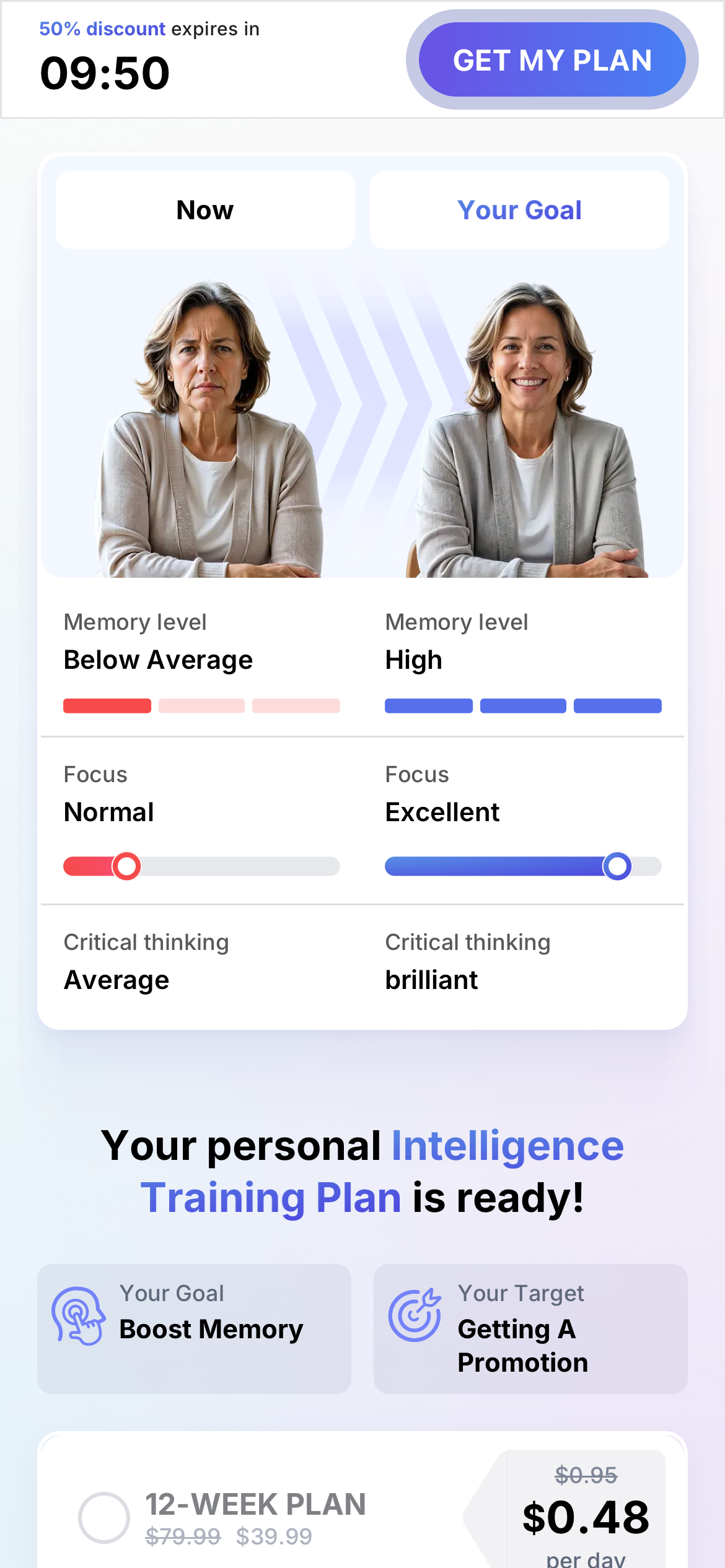
Testing the number of plans has a 57.1% LTV win rate and 58.7% LTV uplift on iOS. If you're running a single-tier paywall, adding 2 more tiers is one of the highest-ROI experiments you can run. 41% of tracked Web2App funnels still use only 1 tier — that's a significant optimization gap.
The Quiz Is Your Soft Paywall. The Paywall Is Hard.
Adapty found that hard paywalls produce 21% higher LTV but soft paywalls get 50% better raw conversion. On iOS, you have to pick one or the other.
Web quiz funnel apps have invented a hybrid that doesn't exist in the iOS world:
100% of tracked Web2App funnels use hard paywalls. There's no free tier, no freemium, no "skip" button. But the quiz acts as the soft entry point — it's free, engaging, and builds commitment through 25-50 personalized questions before the price reveal.
This maps to Adapty's top-performing placement: onboarding paywall + trial = 1.78% install-to-paid (the best of any placement). The web quiz is essentially a supercharged onboarding flow — with 10x more commitment-building steps than a typical iOS onboarding.
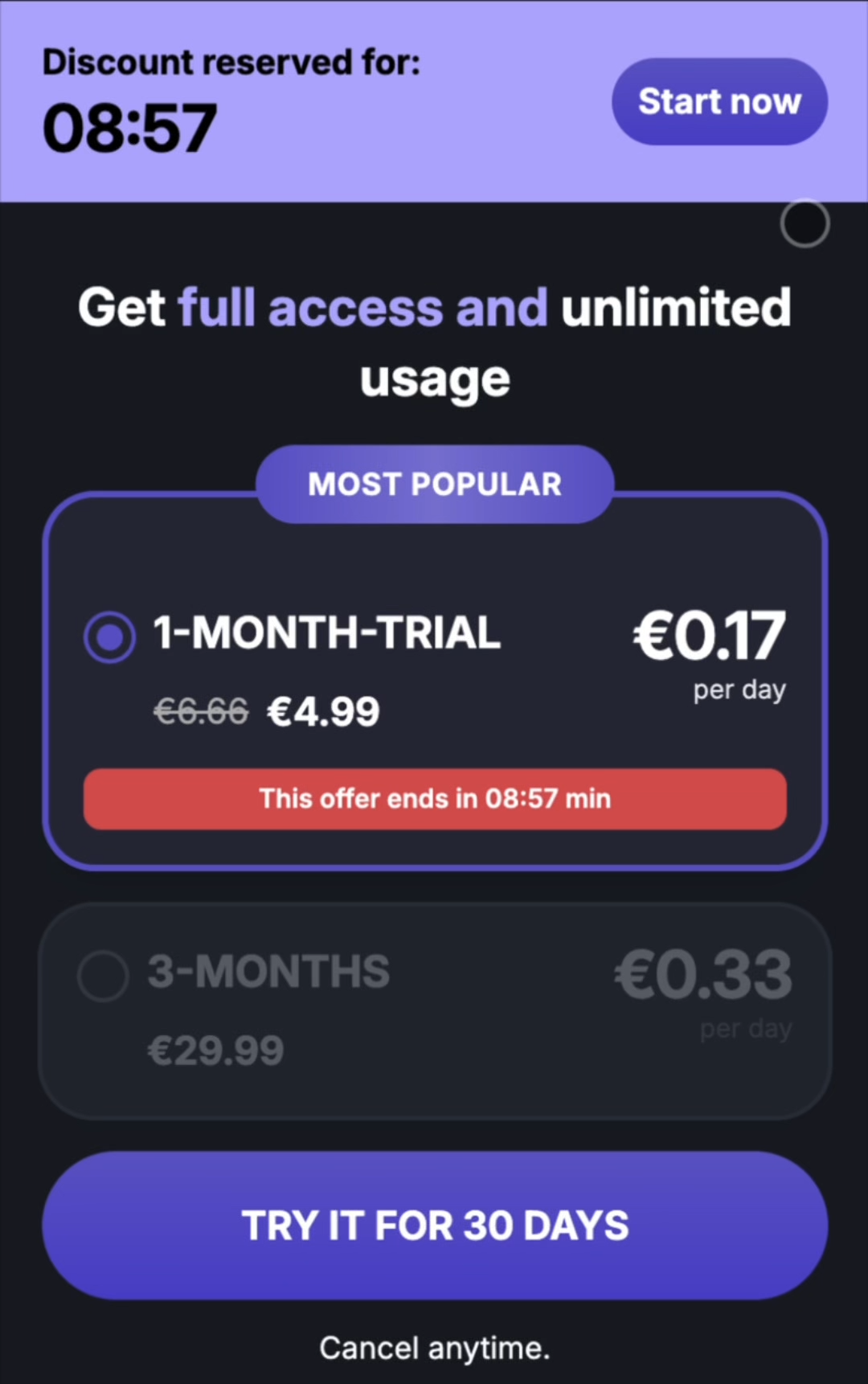


iOS apps are limited to 3-5 onboarding screens before showing a paywall. You get 25-50 quiz steps to build commitment, collect personalization data, and create a "sunk cost" feeling. By the time users see your price, they've invested 5-10 minutes. This is something iOS apps simply can't replicate.
27% More Margin = Your Ad Spend Superpower
This is the most underappreciated structural advantage of Web2App. Let's do the math:
~3% Stripe fees
15-30% to Apple
On a $41.99/mo subscription (the median in our dataset):
This is why Web2App funnels can afford to run aggressive Facebook ads, hire media buyers, and still be profitable at a 1.10% conversion rate. The margin math works because you're keeping $11.34/mo more per subscriber than an equivalent iOS app.
Adapty notes that in-app converts 45% better than web (1.60% vs 1.10%). But when you factor in the 27-point margin difference, Web2App funnels can spend proportionally more per acquisition and end up with similar or better unit economics.
Adapty shows web retention is stronger at Month 1 (64.5% vs 46.2% iOS) but drops faster by Month 6 (~20% vs ~30%). This means your margin advantage compounds in the first few months but erodes over time. Front-loaded LTV extraction (upsells, add-ons) matters more for web than iOS.
Post-Purchase Upsells: The Web-Exclusive LTV Lever
41% of tracked Web2App funnels offer post-purchase upsells. This is nearly impossible on iOS — the App Store tightly controls what you can sell after the initial subscription, and there's no checkout page to inject offers.
Web2App funnels have no such restrictions. The moment a user completes checkout, you own the experience. Three patterns dominate:
Pattern 1: High-Value Recurring Upsell
BetterMe: After the base subscription ($6.93-$66.49 intro), the funnel immediately offers personal coaching at $29.99 → $59.99/4 weeks (recurring). This potentially doubles LTV for users who accept.
Pattern 2: One-Time Digital Products
Nebula: Post-checkout upsells include reading bundles ($14.99-$29.99) and chat credits (up to $99.99). These are one-time purchases that boost immediate revenue without affecting churn.
Pattern 3: Tiered Add-Ons
Mental Impulse: Three sequential one-time upsells totaling $64.97 in potential additional revenue per customer. Each is framed as a "complete your plan" add-on.
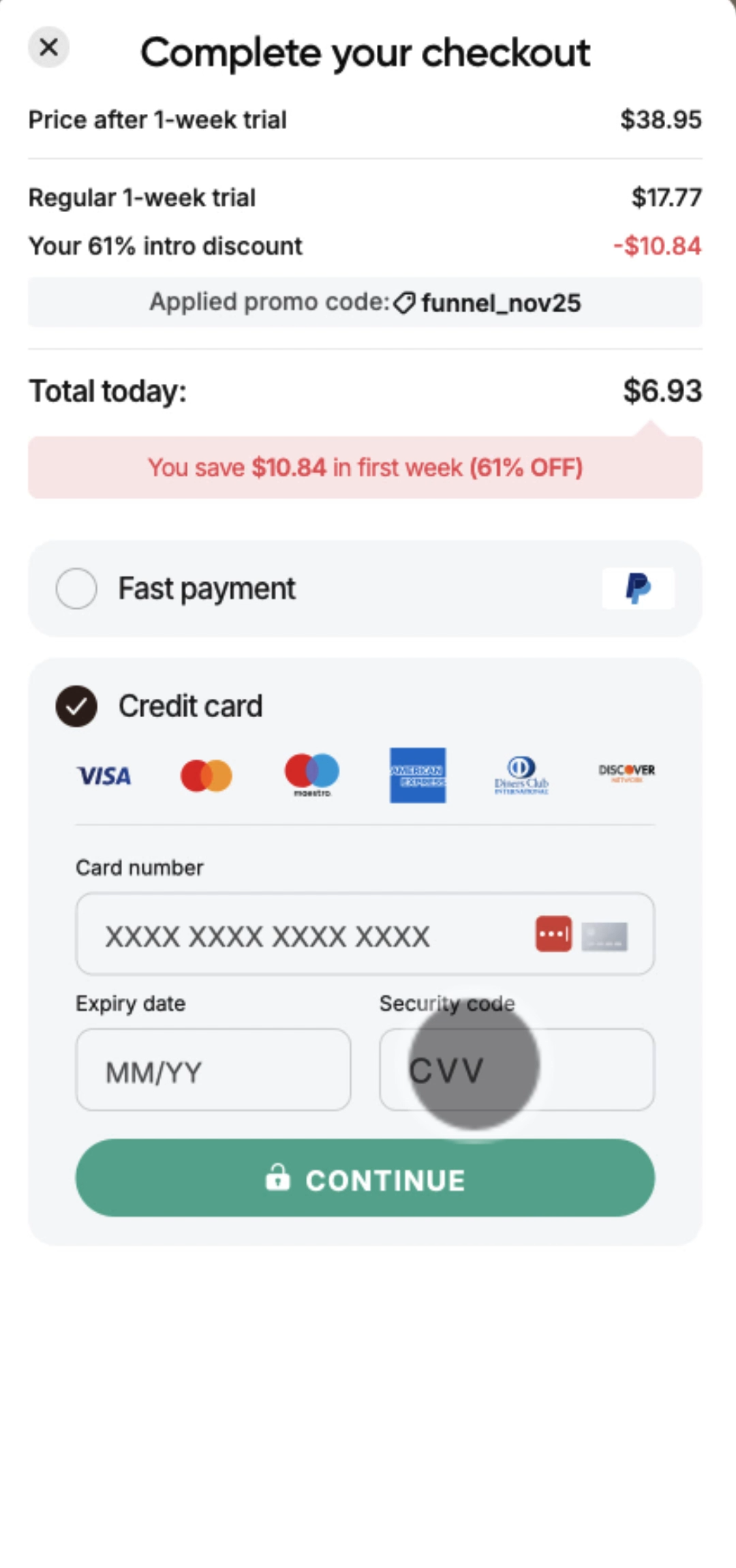
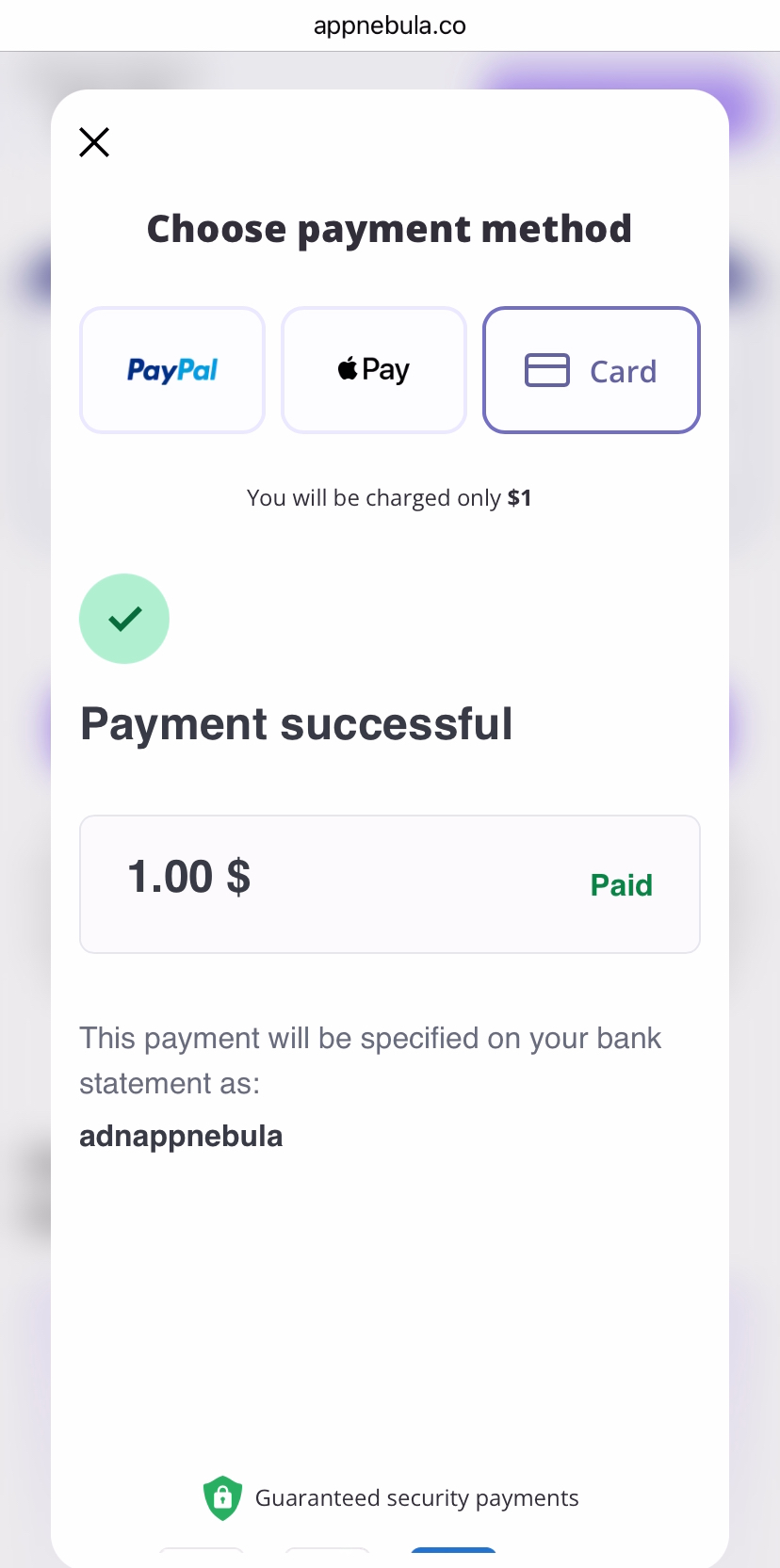
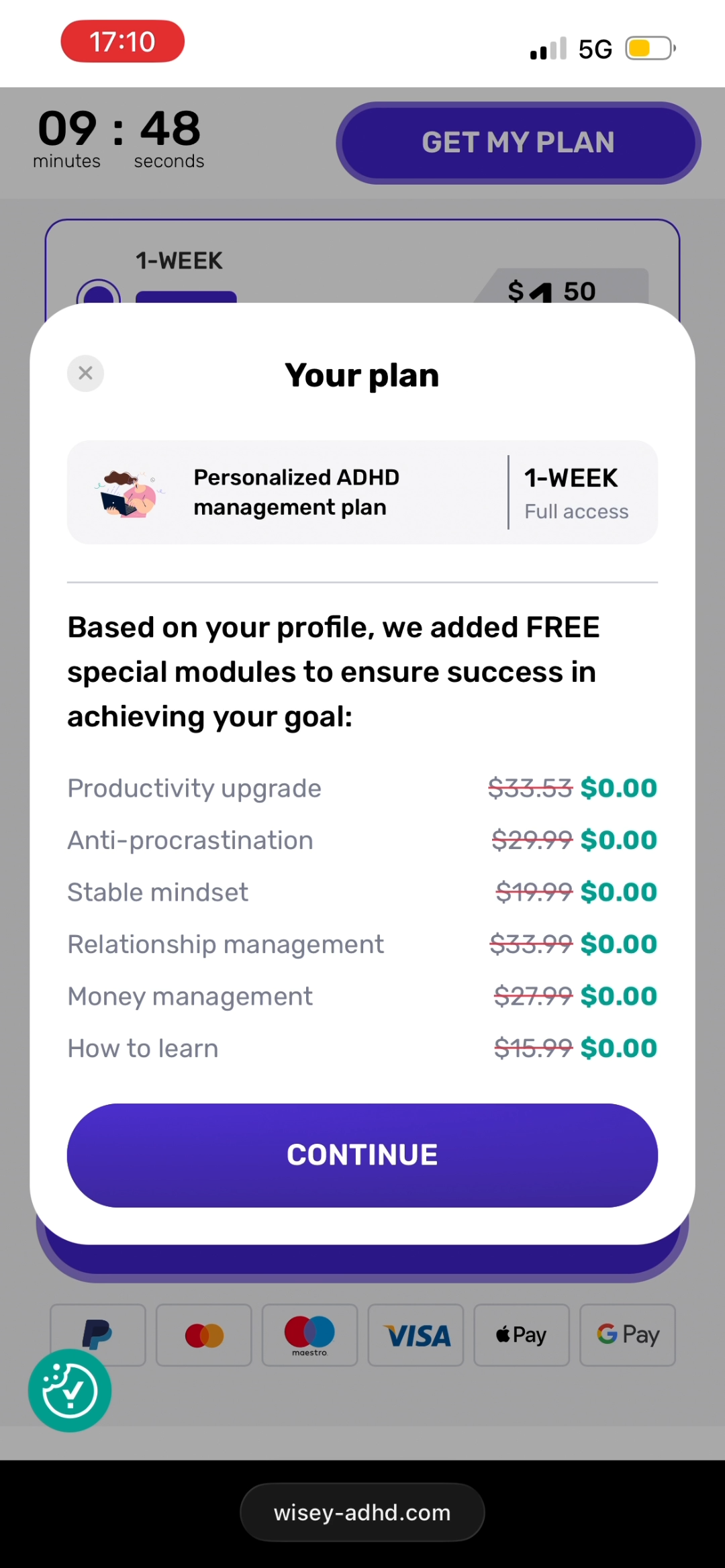
Even at a conservative 15% take rate on upsells, you're adding $2.25-$15.00 per customer. For an app acquiring 10,000 users/month, that's $22,500-$150,000 in additional monthly revenue that an iOS competitor simply cannot capture.
Churn Prevention: The $4.20/User Opportunity 65% of Apps Are Missing
Adapty reports devastating churn curves on iOS: first renewal rate of 59.2%, dropping to 45.1%, then 37.1%, then 31.6%. Each renewal checkpoint is a cliff.
Web2App funnels have a superpower here: you control the entire cancellation experience. No App Store-mandated "Cancel Subscription" button. No two-tap unsubscribe. You can build sophisticated retention flows.
But only 35% of tracked apps are doing it.
The apps that DO have churn prevention use aggressive tactics:
| App | Regular Price | Retention Offer | Discount |
|---|---|---|---|
| MyIQ | $29.99/mo | $6.99/mo | 77% off |
| Nebula | $42.99/mo | $20.99/mo | 51% off |
| Babbel | 14-step cancellation flow with multiple intervention points | ||
| Finelo | Survey-based with broker redirect for undecided users | ||
If your renewal rate improves from Adapty's 59.2% baseline to even 69.2% (a 10-point bump) at $41.99/mo, that's $4.20 recovered per user at the first renewal alone. Across 10,000 subscribers, that's $42,000/month. And that compounds — saving a user at R1 means they're also present at R2, R3, R4.
Localization Is the Highest-ROI Test — And You Have a Structural Edge
Adapty's A/B testing data shows a clear hierarchy of what works:
Localization wins 62.3% of the time — the highest of any experiment type. And Web2App funnels have a massive structural advantage here: you can deploy different landing pages per language and region with zero App Store review.
MyIQ alone runs 18+ domain/language combinations. Multiple tracked apps have DE, FR, ES, PT funnel variants. On iOS, localization requires App Store review cycles and is limited to what Apple allows. On web, it's a URL change and a translated template.
Even more powerful: price discrimination via URL. Different landing pages can show different prices based on geography, traffic source, or user segment. This is something iOS apps simply cannot do post-ATT.
If you're only running English funnels: localization is the single highest-ROI experiment you can run, per Adapty's data. And you have the easiest path to implementing it — duplicate your funnel, translate, deploy to a new subdomain. Teams that experiment heavily earn up to 40x more revenue than those that don't (Adapty).
How We Built This Analysis
Category Distribution
Pricing data was extracted from two sources: (1) structured metadata in funnel configurations, and (2) vision-based extraction from paywall screenshots stored on our CDN. All prices are in USD unless noted. EUR pricing (Visual Mind) was noted but not converted to avoid exchange rate assumptions.
Complete App Index
| App | Category | Pricing Type | Tiers | Intro | Renewal/mo |
|---|---|---|---|---|---|
| MyIQ | Health | Trial → Sub | 1 | $1.00 | $29.99 |
| Hint | Lifestyle | Trial → Sub | 1 | $1.00 | $29.99 |
| Nebula | Lifestyle | Trial → Sub | 1 | $1.00 | $42.99 |
| Avoro | Education | Trial → Sub | 1 | $4.99 | $42.50 |
| Visual Mind | Education | Trial → Sub | 1 | €4.99 | €6.67 |
| Wisey ADHD | Health | Trial → Sub | 1 | $1.50 | $48.50 |
| BetterMe | Health | Tiered Intro | 3 | $6.93 | $33.25 |
| MadMuscles | Health | Tiered Intro | 3 | $6.93 | $39.99 |
| Astari | Productivity | Tiered Intro | 3 | $9.99 | $49.99 |
| Attainify | Health | Tiered Intro | 3 | $10.50 | $43.50 |
| Finelo | Education | Discounted Sub | 3 | $6.93 | $39.99 |
| Mental Impulse | Health | Discounted Sub | 3 | $4.99 | $59.97 |
| Rise Guide | Education | Subscription | 3 | $19.99 | $41.99 |
| Babbel | Education | Subscription | 4 | $40.39 | $8.05 |
| Liven | Health | Discounted Intro | 1 | $19.99 | $49.99 |
| Luvly | Health | Subscription | 3 | TBD | TBD |
| Simple Life | Health | Subscription | 3 | $3.99 | TBD |
Your Paywall Optimization Checklist
Based on every finding in this report, here are the highest-impact changes ranked by potential revenue impact:
| # | Action | Supporting Data | Impact |
|---|---|---|---|
| 1 | Add churn prevention flows | 65% of apps lack this; 10-point R1 improvement = $4.20/user | Critical |
| 2 | Add post-purchase upsells | 59% of apps have none; 15% take rate = $2.25-$15/user | Critical |
| 3 | Test 3-tier pricing (if using 1 tier) | 57.1% LTV win rate (Adapty); 41% of Web2App funnels still use 1 tier | High |
| 4 | Localize your funnel (DE, FR, ES, PT) | 62.3% of tests show LTV uplift (Adapty); highest-ROI experiment | High |
| 5 | Add trial/intro pricing (if at full price) | 636% LTV boost on iOS with trials; 88% of Web2App funnels use discounts | High |
| 6 | Test weekly billing at lower price points | iOS optimal: $5.99/wk; Web2App funnels currently 2.8x higher | Medium |
| 7 | Add money-back guarantee | 41% of top apps use this; reduces friction on hard paywalls | Medium |
| 8 | Display per-day pricing | "$0.71/day" feels cheaper than "$19.99/4 weeks"; 24% use this | Medium |
You're building in the hardest conversion environment (web, cold traffic, 1.10% CVR) but with the best economics (97% margin, unlimited upsells, full cancellation control). The apps winning this game aren't just optimizing their paywalls — they're exploiting every structural advantage that web gives them over iOS. Start with churn prevention and upsells. That's where the money is.